|
Keynote Speakers
|
  
|
Prof. Dr. Anna Esposito,Università della Campania “Luigi Vanvitelli”,Viale Ellittico 34,81100, Italy
Anna Esposito received her “Laurea Degree” summa cum laude in Information Technology and Computer Science from University of Salerno in 1989 with a thesis on: The Behaviour and Learning of a Deterministic Neural Net (published on Complex System, vol 6(6), 507-517, 1992). She received her PhD Degree in Applied Mathematics and Computer Science from University of Napoli “Federico II” in 1995. Her PhD thesis on: Vowel Height and Consonantal Voicing Effects: Data from Italian (published on Phonetica, vol 59(4),197-231, 2002) was developed at Massachusetts Institute of Technology (MIT), Research Laboratory of Electronics (RLE), under the supervision of Professor Kenneth N Stevens.
She has been Post Doc at the International Institute for Advanced Scientific Studies (IIASS), Assistant Professor at the Department of Physics at the University of Salerno (Italy), and Research Professor (2000-2002) at the Department of Computer Science and Engineering at Wright State University (WSU), Dayton, OH, USA. Anna is currently Full Professor in Artificial Intelligence and Multimodal Communication at the Department of Psychology of the University of Campania “Luigi Vanvitelli”. Her teaching responsibilities include Fundamentals of Artificial Intelligence, Multimodal Communication, Human Machine Interaction, Cognitive Economy, and Decision Making. She authored 320+ peer reviewed publications in international journals, books, and conference proceedings, edited/co-edited 33+ books/conference proceedings and guest edited several special issues, among those the International Journal on Artificial Intelligence Tools (IJAIT, 2017), and Cognitive Computation (2014, 2012). Anna has been the Italian Management Committee Member of several ESF COST Actions among those COST 277 on Nonlinear Speech Processing, https://www.cost.eu/actions/277 and COST TD0904 on Time in Mental Activity, https://www.cost.eu/actions/TD0904/. Additionally she has been CHAIR AND PROPOSER of COST 2102 on Cross Modal Analysis of Verbal and Nonverbal Communication, https://www.cost.eu/actions/2102/.
Since 2006, she is a Member of the European Network for the Advancement of Artificial Cognitive Systems, Interaction and Robotics (www.eucognition.org).
Her research interests include Artificial Cognitive Systems and the applications of Artificial Intelligence in various disciplines.
Title: Human-Centered AI: The IRRESPECTIVE Case
Abstract:In this talk, Professor Anna Esposito shows how Artificial Intelligence is not just a matter of algorithms and computational power, but requires a strongly interdisciplinary approach, capable of combining scientific and technological disciplines with psychology and ethics to create technologies that can interact in a human, empathetic, and responsible way.
This is shows through the IRRESPECTIVE project, a real-world use case showing how, thanks to AI, it is now possible to non-invasively analyze everyday signals that often escape the human eye, such as micro-hesitations and the melody of the voice during narration, the pressure and tilt of a pen on a digital tablet, or the subtle dynamics of facial expressions. From research to social impact, this provides a concrete demonstration that AI, when guided by an ethical vision and close collaboration across disciplines, can become a key ally in protecting the health of the most vulnerable individuals.
|
|
  
|
Prof. Dr. Habil. Smaranda BELCIUG,University of Craiova, Romania
Smaranda Belciug is a Full Professor of Computer Science at the University of Craiova, Romania, and a PhD supervisor with the Romanian Academy. Her research focuses on artificial intelligence applied to medicine, with particular emphasis on medical imaging, intelligent decision support systems, applied statistics, and generative models. She has led and coordinated major national and European-funded research projects in AI for healthcare, including large-scale clinical applications in obstetrics and fetal morphology analysis. Prof. Belciug is the holder of a European patent on AI-based detection of internal organ anomalies and has received multiple awards from the Romanian Academy for contributions to science and medicine. She serves as Senior Editor for BMC Medical Informatics and Decision Making and is actively involved as an expert evaluator for Horizon Europe health research programmes. Her work bridges AI innovation and real-world clinical practice.
Title: Obstetrics, Reimagined: The Role of AI in the Next Generation of Care
Abstract:
Artificial intelligence is frequently framed as a disruptive agent in medicine, often accompanied by concerns regarding professional displacement and erosion of clinical autonomy. In obstetrics, such concerns are amplified by the dual-patient context, where decisions simultaneously impact both mother and fetus. This keynote advances a different position: AI is unlikely to replace obstetricians, but will instead restructure the delivery of obstetric care.
Through the integration of medical imaging, longitudinal maternal–fetal datasets, and advanced decision-support systems, AI facilitates a transition from reactive evaluation to anticipatory, risk-aware care. Applications range from supporting the interpretation of fetal morphology to early prediction of delivery mode, effectively converting fragmented clinical observations into structured, patient-specific insights.
Importantly, these systems are not decision-makers; they function as analytical and predictive instruments that inform, simulate, and contextualize clinical reasoning. Extending beyond algorithmic outputs, the discussion addresses the role of AI-driven models and emerging pregnancy digital twins in enabling clinicians to explore uncertainty, model alternative scenarios, and refine risk assessment.
The trajectory of obstetrics is therefore not one of automation, but of augmentation—where computational systems extend clinical cognition while maintaining human responsibility, interpretability, and trust.
|
|
|
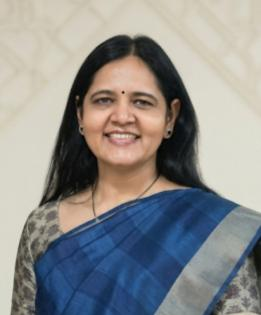
Professor Dr. Mayuri Mehta, Sarvajanik College of Engineering and Technology (SCET), India
Dr. Mayuri Mehta is a Professor of Computer Engineering at Sarvajanik College of Engineering and Technology (SCET), Surat, India, with over 26 years of academic, research, and institutional leadership experience. She also serves as the International Relations and External Affairs Officer of the institute, where she actively develops global academic partnerships and international collaborations for students and faculty. In addition, she leads the AI Task Force at Sarvajanik University, guiding initiatives to integrate Artificial Intelligence into research, academics, and institutional operations.
Her research work focuses on Applied AI, Data Science, Medical Image Analysis, Health Informatics, and Computer Vision, with particular interest in AI for healthcare and societal impact. Dr. Mayuri has worked on several academic assignments in collaboration with professors across the globe. She has been travelling the world for over a decade, sharing her knowledge with students, faculty members and researchers at various universities and international conferences. Dr. Mehta has delivered more than 140 invited talks, keynote lectures, and technical sessions at international conferences, universities, and professional forums across the world. Her lectures have been hosted by institutions such as Imperial College London, Coventry University and Ulster University (UK), the University of Rhode Island (USA), and IEEE international conferences across the globe & IEEE international sections. Through academic missions and collaborations, she has visited universities in more than 15 countries including the USA, UK, Germany, France, Switzerland, Singapore, and Malaysia
She holds 18 patents, has authored six international books published by Springer and CRC Press, and has published over 60 research papers in reputed journals, conferences, and edited volumes. Her contributions to engineering education and research have been recognized through multiple honors, including the ‘Best Paper Awards’, the ‘Nation Builder Award (Rotary District 3060)’, ‘Best Teacher Award’ by 112 years old philanthropic Sarvajanik Education Society, and ‘Researcher of the Year Award (Engineering – Female)’. She was also featured in the “Women in AI” initiative by INDIAai (INDIAai.gov.in), recognizing her contributions to Artificial Intelligence research and education (Women in AI on INDIAai) (INDIAai Post on LinkedIn ).
Title: Agentic AI for Intelligent Systems: A New Paradigm in Autonomous System Design
Abstract: The field of Artificial Intelligence is rapidly evolving from passive models to autonomous, goal-driven systems. This keynote presents Agentic AI as a new paradigm for designing intelligent systems, where AI moves beyond generating responses to actively planning, deciding, and executing tasks.
Traditional Large Language Models (LLMs) are strong in reasoning and content generation but rely on static knowledge and lack real-world interaction. Retrieval-Augmented Generation (RAG) enhances these models by integrating real-time, external data, improving accuracy and contextual relevance. However, both approaches remain largely reactive and limited in handling complex, multi-step problems.
Agentic AI addresses these limitations by combining reasoning, memory, planning, and tool usage into a unified framework. AI agents can break down complex goals, interact with external systems, and iteratively refine their actions. In multi-agent settings, this extends to collaboration, task delegation, and adaptive decision-making, enabling more robust and scalable intelligent systems.
This paradigm marks a shift from systems that only ‘think’ to systems that can ‘think, decide, and act’ autonomously.
Keywords: Agentic AI, Intelligent Systems, AI Agents, Multi-Agent Systems, Autonomous Decision-Making, Retrieval-Augmented Generation (RAG), Large Language Models (LLMs)
|
|